


Introduction
The online dating world is changing fast. It’s no longer just about basic websites. Today, everything happens on mobile. Specifically, location-based dating app development has taken over the market. People want instant connections. They want to see who is nearby right now.
Among all these platforms, Grindr is a true pioneer. It changed the game for real-time social discovery. It proved that niche communities want a space of their own. If you want to enter this market, you need a plan. You need to understand the dating app development process from start to finish.
In this guide, I’ll show you exactly how to develop a dating app like Grindr. We will cover features, the dating app technology stack, and the total cost of dating app development. Let’s dive in.
Why the Demand for Location-Based Dating Apps is Exploding

Why are these apps so popular? It’s simple. People value their time. A GPS-based dating app removes the waiting game. With a smartphone and a fast internet connection, users expect to find a match in seconds. This shift toward “real-time” is the reason why mobile dating app development is a top priority for tech entrepreneurs.
But there is more to it than just speed. We are seeing a massive rise in community-focused dating apps. Modern users are tired of generic platforms. They want to be around people who share their values or identity. This is why LGBTQ dating app development and other niche platforms are seeing such high engagement.
When you build a dating app like Grindr, you focus on three things: proximity, simplicity, and instant chat. These features lead to higher retention. Users keep coming back because the app feels alive. They know there is always someone new nearby. This is a huge opportunity for startups looking to enter the social networking space.
What exactly is a Grindr-like dating App?
At its core, a Grindr-like dating app development project focuses on a mobile-first experience. It connects people based on where they are and what they like. Most of these apps use a “freemium” model. This means the basic app is free, but users pay for premium “boosts” or advanced filters.
A successful Grindr clone app development project relies on three pillars. First is location-based profile discovery. The app uses real-time GPS data to show a grid of nearby users. Second is the community aspect. The app isn’t just for anyone; it serves a specific group. Third is personalization. Users can filter their search to find exactly who they are looking for.
Who Should Invest in This?
You might be wondering whether this is right for your business. Usually, dating app development is an excellent fit for:
- Startups wanting to disrupt the social discovery market.
- Entrepreneurs focusing on niche dating app development.
- Existing brands are looking for a subscription-based revenue model.
- Companies that want to leverage real-time dating app development for specific communities.
How Does a Dating App Like Grindr Actually Work?
The user journey must be seamless. It starts with user registration and onboarding. You want people to sign up quickly via email, phone, or social media. Once they are in, they create a profile. They add photos, a bio, and their interests. This is where dating app UI/UX design becomes critical. It needs to be intuitive.
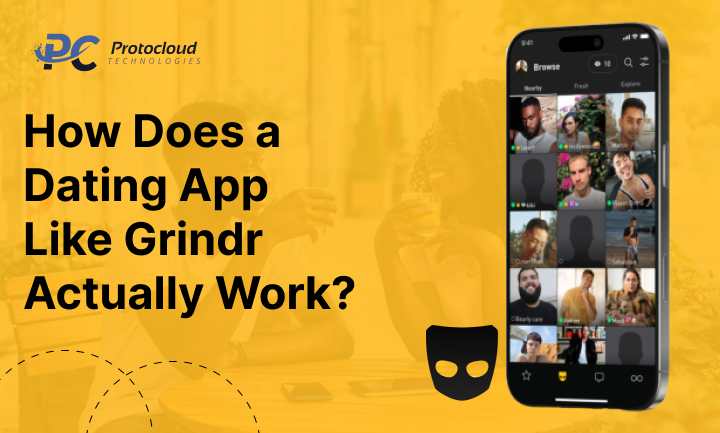
The heart of the app is the logic for matching nearby users. The software constantly updates the user’s location. As they move through a city, their grid of potential matches changes. No complex matching algorithms are required here. Users simply browse, click a profile, and start chatting.
This real-time chat dating app experience is what keeps people hooked. You need push notifications to alert users of new messages. You also need media sharing so they can send photos. Every step of the flow should be fast and responsive. If the app lags, users will leave.
Essential Features for Your Dating App
To succeed, you need a solid feature set. You need to consider both the user and the administrator. Let’s break down the dating app features you need for a competitive product.
The User Panel
The user panel is where the magic happens. It needs a clean swipe-based dating platform feel or a grid view. Key features include:
- Easy Login: Social media and phone number integration.
- Profile Management: Let users easily edit their bios and photos.
- Discovery Grid: A real-time view of nearby users based on GPS.
- Instant Messaging: A fast, real-time chat dating app interface.
- Advanced Filters: Let users filter by age, height, or specific “.”
- Privacy Controls: Options to block or report suspicious users.
The Admin Panel
You cannot run a successful app without a powerful back office. Your admin panel needs:
- User Management: To handle reports and ban bad actors.
- Content Moderation: Using AI matchmaking for dating apps to flag inappropriate photos.
- Analytics: To track how many people are using the app daily.
- Payment Control: To manage subscriptions and in-app purchases.
Advanced Features to Stand Out
If you want to beat the competition, basic features aren’t enough. Consider adding AI-powered matchmaking to suggest better profiles. You should also look into user verification in dating apps. This uses AI to compare a live selfie with a user’s profile photos to prevent catfishing. Voice and video calling are also becoming standard for secure dating app development.
The Right Dating App Technology Stack
Pick the wrong tech, and everything gets harder. Pick the right one, and growth becomes easier. For the frontend, you have options. You can go native with Swift for iOS and Kotlin for Android. Or, you can choose cross-platform dating app tools like Flutter or React Native. These allow you to build one app that works on both platforms, saving time and money.
The dating app backend architecture is where the heavy lifting happens. Most developers use Node.js or Django. These are great for handling thousands of simultaneous connections. For the database, PostgreSQL or MongoDB is the gold standard. You also need WebSockets or Firebase to power your real-time chat features for a dating app.
Finally, don’t forget the cloud. A trusted cloud platform, such as AWS or Google Cloud, is essential for stability. Since your app relies on maps, you will need the Google Maps API. This ensures your location-based dating app development project stays accurate and fast.
How to Develop a Dating App Like Grindr: Step-by-Step
Building an app is a journey. It starts with market research. You need to validate your idea. Is there a gap in the market? Next comes feature planning. Don’t try to build everything at once. Focus on the core experience first.
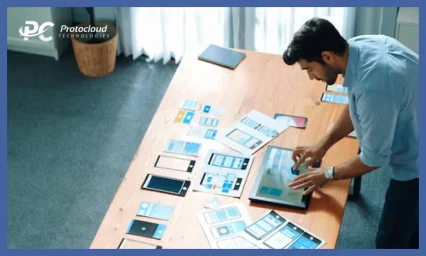
After planning, you move into UI/UX design. Create a realistic prototype that showcases the app’s actual design and flow. Once you are happy, the mobile dating app development team starts coding. They build the frontend and backend simultaneously.
Next is the testing phase. Testing and quality assurance are vital. You need to find bugs before your users do. After testing, it’s time to deploy to the app store. But the work doesn’t stop there. You need post-launch maintenance to keep the app running smoothly and to add new features based on feedback.
Understanding the Dating App Development Cost

How much does it cost? This is the most common question. The dating app development cost depends on how complex your app is. If you start with a dating app MVP development (Minimum Viable Product), you can expect to pay between $20,000 and $40,000. This covers the core features like location and chat.
If you want a full-scale app with all the bells and whistles, the price goes up. A high-end Grindr-like dating app development project can cost between $60,000 and $150,000. Several factors change the price:
- Platform: Is it just for iOS, or both iOS and Android?
- Location: Where is your development team based?
- Complexity: Are you adding video calls or AI verification?
- Design: How custom is the UI/UX?
Dating App Monetization Strategies
You are building this app to make money. The most successful dating app monetization strategies involve the “Freemium” model. You give the app away for free to build a huge user base. Then you offer a subscription model for power users on a dating app.
Users might pay to see more profiles in their grid. Many users opt for paid private browsing features to maintain discretion. You can also sell “Boosts” that put their profile at the top of the grid for an hour. Other options include in-app advertisements and sponsored profiles. The key is to balance making money with a great user experience. If you show too many ads, people will delete the app.
Lessons from Successful Apps
Look at Grindr. They succeeded by focusing on a specific niche. They made the onboarding process incredibly fast. Another example is HER. This is an excellent example of community-focused dating apps. They added social feeds and events, which increased user retention.
Then there is Scruff. They targeted a different segment of the LGBTQ community and added travel modes. These case studies show that niche dating app development is often more profitable than chasing the next Tinder. Focus on a specific group and solve their problems.
Privacy, Security, and Safety Challenges
When you develop a dating app like Grindr, security is your biggest hurdle. Privacy and security on dating apps are not optional. You are handling sensitive location data. If that data leaks, your reputation is ruined. You must implement end-to-end encryption for all messages.
You also need to ensure GDPR compliance and comply with other regional laws. Another challenge is fake profiles. This is why user verification on dating apps is essential today. Use AI to flag scammers and provide easy “Block and Report” tools.
Finally, consider “location blurring.” Instead of showing a user’s exact house, show a general range. This protects user safety while still allowing for nearby user matching app functionality. Building a secure dating app development project builds trust. Trust leads to long-term success.
Why You Need a Professional Development Team
Building a real-time dating app development project is hard. It requires extensive technical knowledge. You need to consider dating app scalability. What happens when 100,000 people join on the same day? Will your servers crash?
A professional dating app development company has experience. They know how to build a scalable and secure architecture. Their expertise reduces time-to-market. They also provide ongoing support and upgrades. This lets you focus on marketing and growing your community while they handle the code.
Conclusion
Building a dating app like Grindr is a massive opportunity in 2025. The demand for location-based dating app development continues to grow. People want faster, more niche, and more secure ways to meet. By following the proper dating app development process and choosing a robust technology stack, you can build a successful platform.
Remember to start with an MVP. Building user safety and privacy into the product from the start is essential. If you can make a community that feels safe and engaged, the revenue will follow. Are you ready to start your journey into the world of mobile dating app development?
Frequently Asked Questions
How long does it take to develop a dating app like Grindr?
Usually, it takes about 4 to 8 months. This depends on how many features you want. A simple MVP is faster, while a full app takes longer.
How much does it cost to build a Grindr-like dating app?
The cost of dating app development ranges from $20,000 for a basic version to over $150,000 for a high-end, custom app.
Can I launch an MVP first?
Yes! In fact, I recommend it. MVP development for dating apps lets you test your idea with real users before you spend your entire budget.
How do dating apps generate revenue?
Most use a dating app subscription model. They also make money through in-app purchases, ads, and premium profile boosts.
What security measures are required for dating apps?
You need end-to-end encryption, secure logins, and AI-based moderation. You must also comply with privacy laws such as GDPR to protect user data.



















Leave a Reply