


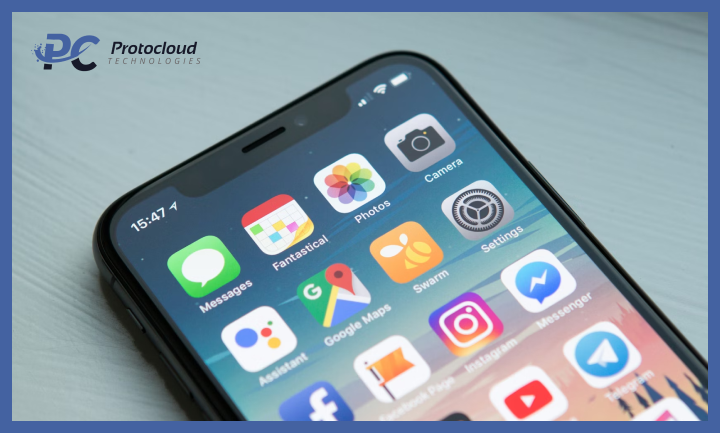
For a long time, public safety work was defined by radios, clipboards, and systems that only came together once everyone returned to a central office. However, over the past few years, that gap has narrowed in a noticeable way. Mobile apps have become part of how responders think, record, and coordinate while events are still unfolding.
In fact, data from a U.S. Public Safety Trends Report showed that 89% of first responders in America used mobile phones in workday tasks. Apparently, 49.3% of usage situations involved taking images and videos for evidence, while another 39.8% were for on-site reporting.
Apps are increasingly being used to help protect and serve the public, often via integration with other systems. In this article, let’s explore how modern apps are aiding society and keeping people safe. They’re Helping Healthcare Workers Stay Safe
Hospitals and clinics are often viewed as controlled environments, yet those who work inside them know how unpredictable they can become. Nurses and other healthcare workers regularly face heightened emotional situations, and in some cases, physical threats. In response, body worn camera solutions have begun to appear in healthcare settings as a way to improve safety and accountability.
The BBC recently featured Emeria Doherty, a nurse with over 25 years of experience, who stated that wearing body cameras made her feel safer. According to Doherty, some patients throw anything they can get their hands on at nurses, even knives.
On its own, the camera serves as a deterrent and a record. Its broader value emerges when paired with mobile apps that organize, store, and contextualize what is captured. As Vestige explains, body camera solutions come with cloud-based video management. This also allows for live-streaming capabilities, meaning hospital or security supervisors can track in real-time any high-risk situations being handled by staff.
The other bonus of having recorded footage of situations is that you have a clear record of what occurred and when. For healthcare workers who already carry significant responsibility, that clarity can make daily work feel more manageable and less exposed in case lawyers need to get involved.
They Help First Responders in Emergency Situations

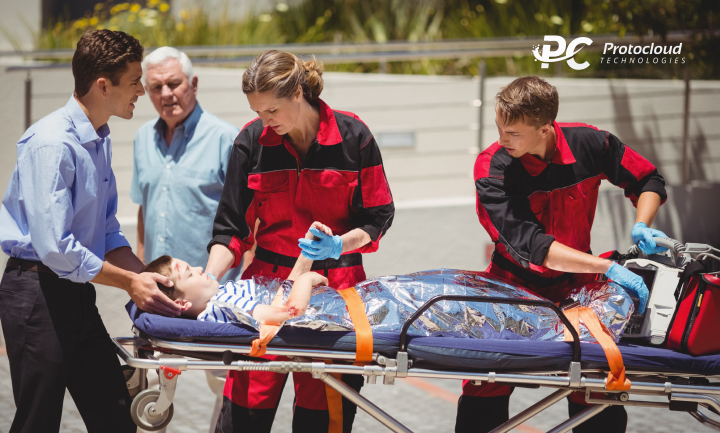
Emergencies, particularly ones involving schools, present a different challenge. The issue is often not a lack of responders, but uncertainty about where to go and how to move efficiently within unfamiliar buildings. In these scenarios, mobile mapping apps have become critical tools for reducing confusion.
Mike Rodgers, a U.S. Army Ranger veteran, is mapping every public and private building across the country for first responders. Rodgers wondered if something bad happened to his wife’s school, how would responders find her room to help? Emergency responders can view digital maps on a mobile application, which also shows police, firefighters, and paramedics as dots.
This kind of visibility changes how coordination works. Instead of relying on verbal directions under stress, teams can align their movements visually. Firefighters, police officers, and paramedics gain a shared reference point that updates as they move.
The value of these apps lies in how they reduce mental load. When pressure is high, people benefit from tools that simplify choices rather than complicate them. Clear maps and live positioning allow responders to focus on action rather than orientation.
They Provide Firefighters With Valuable Data
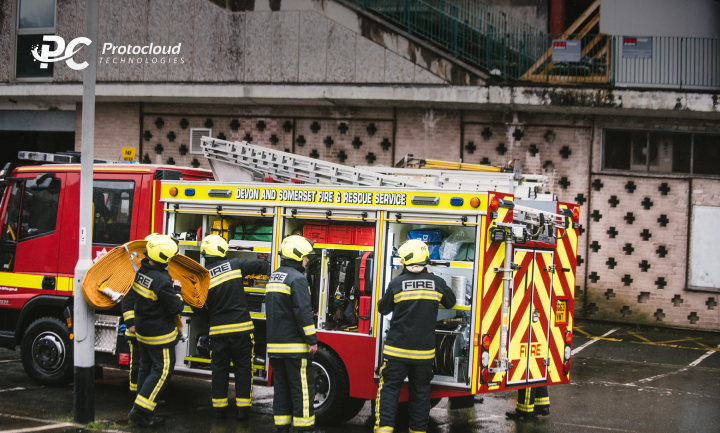
Firefighters and emergency responders work in environments where conditions change faster than plans can be revised. Smoke shifts, structures weaken, and weather alters the landscape in ways that demand constant reassessment. Mobile apps have found their place here by helping responders translate what they see into something others can immediately understand.
Take the case of WatchDuty, an app developed by Liam Winstead, a recent college graduate. His app sends instant notifications to subscribers when a wildfire is confirmed.
Unlike other safety-focused apps, which only target first responders, even residents benefit from it. As a result, it has over 17 million users and over 136,000 paying members. Former California Fire Chief Ken Pimlott also confirmed that unofficially, everyone in the public safety arena was using the app.
The fact that these apps also provide timely alerts to residents also has a bigger impact than you think. With the clearer information available, evacuation compliance improves, and unnecessary calls decrease. This indirectly supports responders by lowering noise in the system and allowing crews to focus on active threats rather than reassurance and clarification.
Frequently Asked Questions
1. How are mobile apps used in public safety today?
Mobile apps are used by responders to share updates, capture photos or videos, view maps, and coordinate movements while incidents are still unfolding. They help reduce delays by allowing information to move instantly between teams in the field and those managing the response.
2. Why are mobile apps important in our daily lives?
Mobile apps help people organize tasks, access information quickly, and communicate without friction. Over time, they become habits rather than tools, shaping how we navigate work, safety, and everyday decisions without needing constant attention or effort.
3. Can anyone wear a body cam?
In many places, body cams can be worn by civilians, professionals, or organizations, as long as local laws around consent and recording are followed. Their use often depends on purpose, environment, and whether privacy regulations are respected.
Thus, across fire response, healthcare, and school safety, mobile apps have shifted from optional tools to essential infrastructure. This is mainly because they solve immediate problems with minimal friction.
They provide clearer information, faster sharing, and better coordination in moments when clarity is hardest to maintain. As public safety environments continue to evolve, the most effective apps will likely remain those that respect the realities of the field.














































Leave a Reply