



Service businesses face a unique scaling challenge. Their growth depends on consistently delivering high-quality client experiences in real time. Unlike product companies, service firms must continually balance capacity, quality, and client satisfaction.
Initial reliance on manual processes and informal workflows quickly creates bottlenecks as client volume increases. This results in lost communication, delayed invoicing, overwhelmed staff, and ultimately, stunted growth.
To overcome this, service businesses must implement robust operational systems. These systems automate routine tasks, standardise workflows, and provide critical visibility into business operations.
This article explores the essential operational systems these businesses need to support growth and maintain excellence as they expand.
Customer Relationship Management (CRM) System
A CRM system functions as the central nervous system for your service business, consolidating all client information, interaction history, and communication in one accessible place. Without it, critical data is scattered across emails and spreadsheets, hindering personalised service and growth identification.
Modern CRMs track the entire client journey, from the initial inquiry to ongoing service, giving your team complete visibility. This ensures continuity, prevents clients from repeating information, and drastically improves client satisfaction and retention. Furthermore, CRMs provide vital analytics on client acquisition, lifetime value, and retention patterns, which drive better strategic and marketing decisions.
The global importance of this technology is evident. Grand View Research reports the CRM market was valued at $73.40 billion in 2024 and is projected to reach $163.16 billion by 2030. Key growth drivers include hyper-personalisation, AI-powered automation, and strong social media service integration.
Implementing a CRM is, therefore, foundational for any business seeking scalable growth and improved customer service.
Project and Task Management Platform


Service delivery requires coordinating multiple team members, tracking numerous client projects simultaneously, and ensuring nothing slips through the cracks. Project and platforms provide the structure and visibility necessary to orchestrate complex service delivery without chaos. These systems replace scattered to-do lists and lengthy email chains with organised, transparent workflows.
Effective project management platforms offer task assignment with clear ownership, deadline tracking with automated reminders, and real-time visibility into progress. They also include file-sharing and collaboration features, along with customizable workflows that align with your service delivery process. Popular options include Asana, Monday.com, ClickUp, and Trello, each offering different approaches to organising work.
The real value emerges when your entire team adopts the platform as the single source of truth for what needs to be done and when. This eliminates confusion about priorities, reduces the need for status update meetings, and ensures clients receive timely service.
Streamlined Client Intake Software
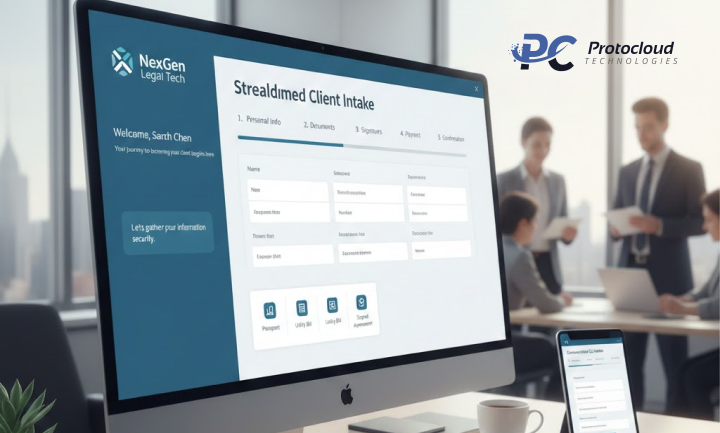
Client intake software transforms the crucial onboarding process from a manual burden into an efficient, professional system. This specialized tool guides new clients through structured information gathering, document submission, digital signing, and payment processing before service engagement begins.
The automation capabilities eliminate duplicate data entry, ensure consistency in information collected, and significantly reduce the administrative load on your team. This creates a polished first impression, boosting client confidence.
The speed and precision of automated intake are key competitive advantages. According to Law Ruler, this software’s pre-screening capabilities quickly analyze lead information, ensuring your team focuses efforts on qualified prospects. The result is the ability to identify high-value leads in seconds, allowing your service business to optimize resource allocation and support scalable growth.
Scheduling and Calendar Management System
Efficient time management is vital for service business growth. Automated scheduling systems eliminate the friction and wasted time associated with manual, back-and-forth email scheduling, maximizing your team’s billable capacity.
Platforms like Calendly or Acuity allow clients to book directly based on real-time availability. They prevent double-booking, send automatic reminders, manage different service types, and often process payments at booking. These systems ensure seamless virtual service delivery through integration with video conferencing tools.
The global demand highlights this necessity. Fact.MR values the appointment scheduling software market at $469.1 million in 2024, projecting it to reach $1.13 billion by 2034. This growth is driven by the need for advanced features like team scheduling and resource management.
Financial Management and Invoicing System
Healthy cash flow is essential for service-based growth, yet reliance on manual bookkeeping often limits financial clarity and control. Modern financial management systems improve this by streamlining core processes such as invoicing, accounts receivable management, and real-time financial reporting.
With better visibility into cash flow and performance, businesses can make more confident operational and strategic decisions.
These platforms automatically generate invoices, send payment reminders, track project profitability, and produce detailed financial reports for planning and compliance. When integrated with scheduling or service delivery systems, these platforms further enhance accuracy and efficiency. For example, an invoice can be automatically triggered as soon as an appointment is completed.
Transparency also plays a critical role in financial operations. A PYMNTS report highlights that digital automation closes visibility gaps in accounts receivable, strengthening relationships with clients and partners. Buyers increasingly expect simpler payment processes and real-time access to invoice and order status. Moreover, 98% of suppliers emphasize the importance of improved data accessibility.
Automated workflows and self-service portals meet these expectations, promoting collaboration, trust, and informed decisions around pricing and growth investments.
Communication and Collaboration Tools
As service teams expand, informal communication fails, burying vital information in emails and disconnecting remote staff. Dedicated Communication and Collaboration Tools (like Slack or Microsoft Teams) create structured, searchable channels to keep everyone aligned.
These platforms centralise project conversations, simplify file sharing, and integrate with other systems, reducing email clutter and speeding up decisions. However, security is paramount. Help Net Security emphasises educating users about phishing risks and promoting secure file-sharing protocols. This includes using encrypted channels and diligently checking permissions when handling sensitive data.
Training employees on best practices is vital, including simulated security exercises to test their knowledge. Thoughtful implementation of these tools strengthens team culture and builds institutional knowledge, avoiding chaos while facilitating connected, informed growth.
Frequently Asked Questions
How do I choose the right operational systems for my specific service business?
Start by mapping your current processes and identifying pain points where manual work creates bottlenecks. Research systems designed for your industry, as they often include specialized features. Prioritize integration capabilities so systems work together seamlessly. Test free trials before committing, and consider scalability by choosing platforms that can grow with your business needs.
What’s the best order for implementing these operational systems?
Begin with your CRM as the foundation, since it connects to most other systems. Next, implement client intake software to standardize your onboarding process. Add scheduling and financial systems simultaneously if possible, as they directly impact cash flow. Finally, layer in project management and communication tools. Allow 1-2 months between implementations for team adoption.
How do I get my team to actually use new operational systems consistently?
Involve team members in the selection process to build buy-in. Provide comprehensive training and create written procedures for common tasks. Designate system champions who can answer questions. Lead by example by using the systems yourself. Make adoption non-negotiable by removing old processes. Celebrate early wins and improvements to reinforce the benefits.
Sustainable growth in service businesses depends on more than demand. It requires strong operational systems that bring structure, visibility, and consistency to daily work. By investing in the right tools, businesses can reduce friction, improve client experiences, and support teams as they scale. When operations run smoothly, growth becomes predictable, manageable, and sustainable.








Leave a Reply