You have a brilliant software idea. You’re excited. You gather your team, start writing code on day one — and three months later, everything falls apart. Deadlines are missed. The budget is blown. The final product doesn’t even solve the original problem.
Sound familiar? This is exactly what happens when teams skip the system development life cycle.
The SDLC isn’t just a boring framework taught in computer science textbooks. It’s the real backbone of every successful software project — from simple mobile apps to massive enterprise platforms. Whether you’re a developer, a project manager, or a business owner trying to understand how software gets built, this guide will walk you through everything you need to know — in plain, simple language.
What Is the System Development Life Cycle?
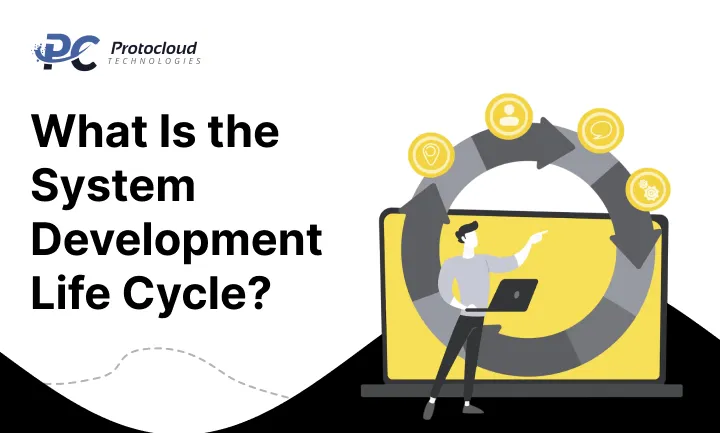
The system development life cycle (SDLC) is a step-by-step process that software teams follow to plan, build, test, and deliver high-quality software. Think of it like a recipe. Without the right steps in the right order, your dish — or your software — won’t turn out right.
The SDLC gives structure to what can otherwise become a very messy process. It keeps teams organised, helps predict costs, reduces risks, and most importantly, it makes sure the final product actually works the way users need it to.
The system development life cycle works for projects of any size. A five-person startup and a Fortune 500 company both benefit from following a clear system development process.
Why Does SDLC Matter So Much?

Here’s the truth: software development without a clear process is like driving cross-country without a map. You might eventually get there. But you’ll waste time, money, and a lot of fuel along the way.
SDLC importance goes beyond just keeping things organised. It directly affects the quality of what you ship. When teams follow proper SDLC phases, they catch bugs earlier, stay within budget, and deliver products users actually love. It also builds trust — with clients, with stakeholders, and within the team itself.
The SDLC benefits are practical and measurable. Teams that follow a defined software development workflow consistently deliver better products faster than those that don’t.
The 7 SDLC Stages Explained
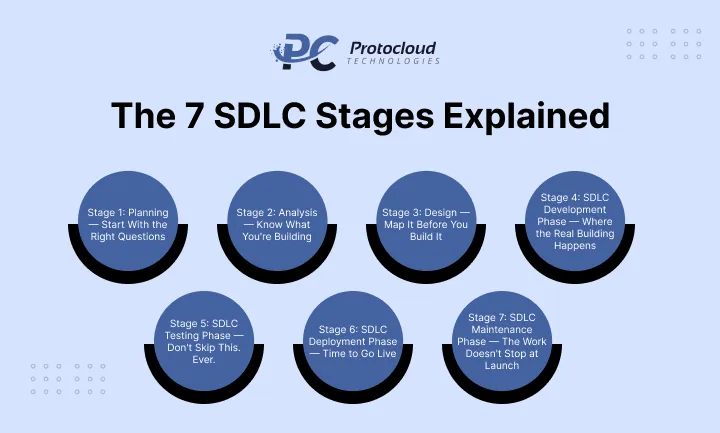
Stage 1: Planning — Start With the Right Questions
Every great software project starts not with code, but with questions. What problem are we solving? Who is it for? Can we actually build this within our budget and timeline?
The SDLC planning phase is where your team defines the scope of the entire project. This is where software project planning happens — setting goals, estimating costs, identifying risks, and mapping out the road ahead. Skipping this stage is the number one reason software projects fail.
Software cost estimation and software risk management are both handled here. You look at what resources you’ll need, what could go wrong, and how to handle it before it becomes a crisis.
Stage 2: Analysis — Know What You’re Building
Once planning is locked in, the team moves into the analysis stage. This is where requirements get specific. What exactly should the software do? What do users expect from it?
The output of this stage is the SRS document — a Software Requirement Specification. This is essentially the blueprint that guides the entire project. Your team conducts system analysis and design at a high level here, defining functional and technical requirements in writing.
Software requirement specification documents save enormous amounts of time later. When everyone agrees on what’s being built before a single line of code is written, confusion and last-minute changes become rare.
Stage 3: Design — Map It Before You Build It
This is where your software starts to take shape — on paper, at least. The design stage is about deciding how the system will look, feel, and function. This includes the software architecture design, user interface layouts, database structures, and how different components will communicate.
The software design process and software prototyping happen here. Teams build early-stage mockups and prototypes to test ideas before committing to full development. Modern prototyping tools with AI features have made this stage faster and smarter than ever before.
Think of this stage as drawing your house plans before you start laying bricks. The more detail you put in here, the smoother the application development process will go.
Stage 4: SDLC Development Phase — Where the Real Building Happens
This is the stage most people associate with software development — because this is where developers actually write the code.
The SDLC development phase brings everything from the planning, analysis, and design stages to life. Both the front-end development process and the back-end development process happen here simultaneously. Developers use programming languages like Python, PHP, C++, and others, depending on the project’s requirements.
DevOps in SDLC plays a critical role at this point. DevOps engineers manage the environments, automate workflows, and set up the CI/CD pipeline, which stands for continuous integration and continuous deployment. This ensures code is tested and deployed quickly and reliably, reducing human error significantly.
Large projects are often broken into modules or microservices, with different teams working on different parts at the same time. This is where software development best practices and clear communication between teams matter most.
Stage 5: SDLC Testing Phase — Don’t Skip This. Ever.
You’ve built something. But does it actually work? That’s what the testing phase answers.
The SDLC testing phase is about finding problems before users do. Developers and QA teams test for bugs, vulnerabilities, performance issues, and usability problems. Software testing methods range from manual testing to fully automated solutions. Tools like Selenium are commonly used for browser-based testing.
Software quality assurance and the bug testing process are the heart of this stage. A bug found during testing costs a fraction of what it costs to fix after launch. This phase also validates that the software meets all the requirements defined in the SRS document.
Behaviour-driven development — where test cases are written in plain English — is growing in popularity because it brings non-technical stakeholders into the quality assurance process.
Stage 6: SDLC Deployment Phase — Time to Go Live
Your software is tested. It works. Now comes the moment everyone’s been working toward — launch.
The SDLC deployment phase is about releasing the software to real users in a live environment. But it’s not as simple as just flipping a switch. Teams use strategies like canary releases — pushing the product to a small group of users first — to catch any remaining issues before a full rollout.
The software release process includes final environment checks, rollback protocols (in case something breaks), and user training if needed. Software implementation process and system integration process are key tasks here — making sure the new software works correctly alongside other existing systems.
Stage 7: SDLC Maintenance Phase — The Work Doesn’t Stop at Launch
Here’s something a lot of people forget: software is never truly “done.” Once users start using it, new issues surface. Needs change. Technology evolves.
The SDLC maintenance phase covers everything that happens after launch. Bugs get fixed. Features get updated. Performance gets improved. Software monitoring tools continuously track how the system is performing — flagging errors and downtime automatically. This practice is often called “instrumentation.”
Software lifecycle management and application lifecycle management are ongoing responsibilities. The best software teams treat maintenance not as a burden, but as a natural part of delivering value to users over the long term.
SDLC Methodologies: 6 Models Every Developer Should Know
Choosing the wrong approach for your software project is like packing for a beach vacation and ending up in the mountains. Everything feels off. The tools don’t fit. The timeline falls apart. And by the end, you’re wondering how it all went so wrong.
That’s exactly why understanding SDLC methodologies matters so much. The model you choose at the start of a project shapes every decision that follows — from how you handle changes to how your team communicates. Getting it right from day one makes everything else smoother.
The 6 Core SDLC Models Explained
1. Waterfall Model — Structure Above Everything
The Waterfall model is the oldest and most straightforward of all SDLC models. It works in a strict, linear order — you complete one stage fully before moving to the next. Planning leads to design, design leads to development, and so on.
This model comes with detailed documentation at every step. That documentation keeps teams aligned, especially when different groups are working on different parts of the project at different times.
The honest downside? Once you move past a stage, going back is painful and expensive. The Waterfall model works beautifully for projects where requirements are clear, fixed, and unlikely to change — think government contracts or large infrastructure software.
2. Iterative Model — Build, Learn, Repeat
The Iterative model breaks the project into smaller cycles, each one delivering a working piece of the software. At the end of every cycle, teams gather feedback, fix issues, and improve before the next round begins.
This approach is one of the most popular software development methodologies because it catches problems early — when they’re still cheap to fix. Real user feedback shapes each new cycle, which means the final product actually reflects what users need.
It is more flexible than waterfall and works well for mid-sized projects where requirements may shift slightly over time.
3. Spiral Model — Built for High-Risk Projects
When a project is large, complex, and full of unknowns, the Spiral model steps in. It moves through the SDLC approaches in repeating loops — each loop addressing risks, gathering feedback, and refining the product.
Risk management in SDLC is at the very core of this model. Before each new spiral, the team evaluates what could go wrong and plans accordingly. This makes it one of the most thorough software development models available.
It’s not the fastest approach, and it requires experienced project managers. But for enterprise-scale projects where failure would be costly, the Spiral model offers protection that simpler models can’t.
4. Agile Model — The Modern Developer’s Favourite
The Agile model has become the most talked-about name in software engineering methodologies — and for good reason. It’s built around collaboration, speed, and constant improvement.
Instead of planning everything up front, Agile methodology works in short cycles called sprints. Each sprint typically lasts one to four weeks and delivers a small, working piece of the software. After each sprint, the team reviews results, gathers feedback, and adjusts for the next round.
The Scrum model is one of the most popular versions of Agile. It uses defined roles — like a Scrum Master and Product Owner — along with daily check-ins and sprint reviews to keep everyone moving in the same direction.
Agile vs Waterfall comparisons come up constantly in the industry, and the short answer is this: Agile wins when flexibility matters. Waterfall wins when stability and documentation matter more. Many modern teams use an Agile Waterfall hybrid to get the best of both worlds — structured planning with room to adapt during execution.
SDLC flexibility, fast delivery, and strong SDLC team collaboration are the biggest strengths of the Agile approach. It’s especially effective for startups, mobile apps, and any product that needs to evolve quickly based on user response.
5&6. V-Model SDLC and Big Bang — Two Specialised Approaches
The V model SDLC, also called the verification and validation model, runs testing in parallel with every development stage. For every phase of building, there’s a matching phase of testing happening at the same time.
This makes it one of the most thorough SDLC testing strategies available. The tradeoff is that it requires significant resources and is not very flexible. It suits projects where precision is everything — medical software, aviation systems, and safety-critical applications.
The Big Bang model SDLC sits at the opposite end of the spectrum. There’s very little planning. Developers start coding almost immediately, building and testing freely. It works for small, experimental, or solo projects where the goal is exploration rather than a fixed outcome. For anything large or budget-sensitive, it’s risky.
SDLC Advantages — What You Actually Gain

When the right methodology is followed with discipline, the results speak for themselves. Here are the core SDLC benefits that teams experience across most models:
- Clear project visibility at every stage of development
- Better SDLC cost estimation and budget control from day one
- Structured SDLC testing strategies that catch bugs before launch
- Stronger SDLC team collaboration and shared understanding across teams
- Detailed SDLC documentation process that keeps everyone aligned
- Greater control over large, complex, and high-stakes projects
- Faster, more reliable software delivery frameworks when followed consistently
These software lifecycle management benefits add up over time. Teams that follow a defined methodology ship better products, miss fewer deadlines, and handle client expectations far more confidently.
SDLC Disadvantages — The Honest Challenges
No methodology is perfect. Every model comes with tradeoffs, and ignoring them is how projects go sideways. Here are the real SDLC limitations and SDLC drawbacks teams commonly run into:
- Heavy documentation requirements can slow down fast-moving teams
- Some models demand that all details be defined upfront, which isn’t always realistic
- Certain SDLC models are rigid and make late-stage changes expensive
- High client involvement throughout the process can create bottlenecks
- Complex methodologies require many different specialists, raising overall project costs
- Testing can become overwhelming for smaller or less experienced development teams
- Software development challenges hit hardest when project requirements shift mid-way
Being aware of these SDLC disadvantages upfront helps teams plan smarter, pick the right model, and set honest expectations with clients and stakeholders from the very beginning.
Conclusion
At Protocloud Technologies, we help businesses successfully implement every phase of the System Development Life Cycle, turning ideas into high-quality, scalable software solutions. From initial planning and requirement analysis to design, development, testing, deployment, and ongoing maintenance, our team ensures a smooth and structured development process. By following proven SDLC strategies, we help you reduce risks, control costs, and launch faster with confidence. Whether you’re a startup or an enterprise, we provide the expertise and technology needed to build software that truly meets your business goals.